Virginia Felon Voting Ban Lawsuit: 2026 Federal Ruling Restores Rights to Thousands
A century-old “Confederate legacy” in the Virginia Constitution has been struck down by the federal bench. As of March 17, 2026, the Virginia felon voting ban lawsuit (King v. O’Bannon, formerly King v. Youngkin) has reached a historic turning point. On January 22, 2026, U.S. District Judge John Gibney ruled that Virginia’s practice of lifetime disenfranchisement for all felonies violates the Virginia Readmission Act of 1870. The court found that when Virginia was readmitted to the Union after the Civil War, it was strictly prohibited from stripping voting rights except for a very narrow set of common-law felonies. By expanding this ban to all felonies—including modern drug offenses—Virginia has been operating in violation of federal law for over 150 years.
The Readmission Act: A Reconstruction-Era Shield
The core of the Virginia felon voting ban lawsuit rests on a specific piece of Reconstruction history. In 1870, Congress set the terms for Virginia’s return to the Union, mandating that its constitution “shall never be so amended or changed as to deprive any citizen… of the right to vote… except as a punishment for such crimes as are now felonies at common law.” In 1870, “common law felonies” were a small, specific list: murder, manslaughter, arson, burglary, robbery, rape, larceny, mayhem, and escape from prison.
Judge Gibney’s 2026 ruling enforces this federal mandate, effectively striking down the disenfranchisement of any Virginian convicted of a “modern” felony (such as drug possession or non-common-law fraud). This legal correction of a long-standing state policy is a massive victory for civil rights advocates, echoing the “civil restoration” themes found in the ICE detention work program lawsuit, where constitutional protections are being reasserted against systemic institutional practices.
The 2026 Constitutional Amendment: November Ballot
While the federal court has provided immediate relief for many, the Virginia felon voting ban could be permanently abolished by voters this fall. On January 16, 2026, the Virginia General Assembly passed HJ 2 for the second consecutive year, officially placing a constitutional amendment on the November 3, 2026, ballot. If approved by a majority of voters, the amendment would:
- Automatic Restoration: Ensure that any person convicted of a felony has their right to vote automatically restored upon release from incarceration.
- End Governor Discretion: Remove the “arbitrary” power of the Governor to personally decide who regains their rights—a system that has fluctuated wildly between administrations.
- Establish a Fundamental Right: For the first time, explicitly recognize the “fundamental right to vote” within the state’s governing document.
This shift toward automatic, non-discretionary rights is a direct response to the “whipsaw” changes seen under previous administrations. This demand for a predictable, rules-based system is a trend we also see in the Disney Inspire DAS lawsuit, where plaintiffs are fighting against subjective “gatekeeping” of fundamental access.
The Impact: 300,000 Virginians in Limbo
As of early 2026, an estimated 300,000 Virginians remain disenfranchised due to prior felony convictions—a rate that includes one in eight Black residents in the Commonwealth. The January federal ruling provides an immediate path to the ballot for approximately 260,000 of those individuals whose crimes were not part of the 1870 common-law list. The remaining individuals must wait for the outcome of the November 2026 referendum.
The political friction surrounding this case remains high. Much like the Paramount Trump lawsuit, where corporate and political interests collided over “narrative control,” the Virginia voting battle has seen intense debate over whether restoration should be “earned” through a petition or granted as a basic civil right. Newly inaugurated Governor Abigail Spanberger has publicly supported the automatic restoration amendment, signaling a new era for Virginia’s executive branch.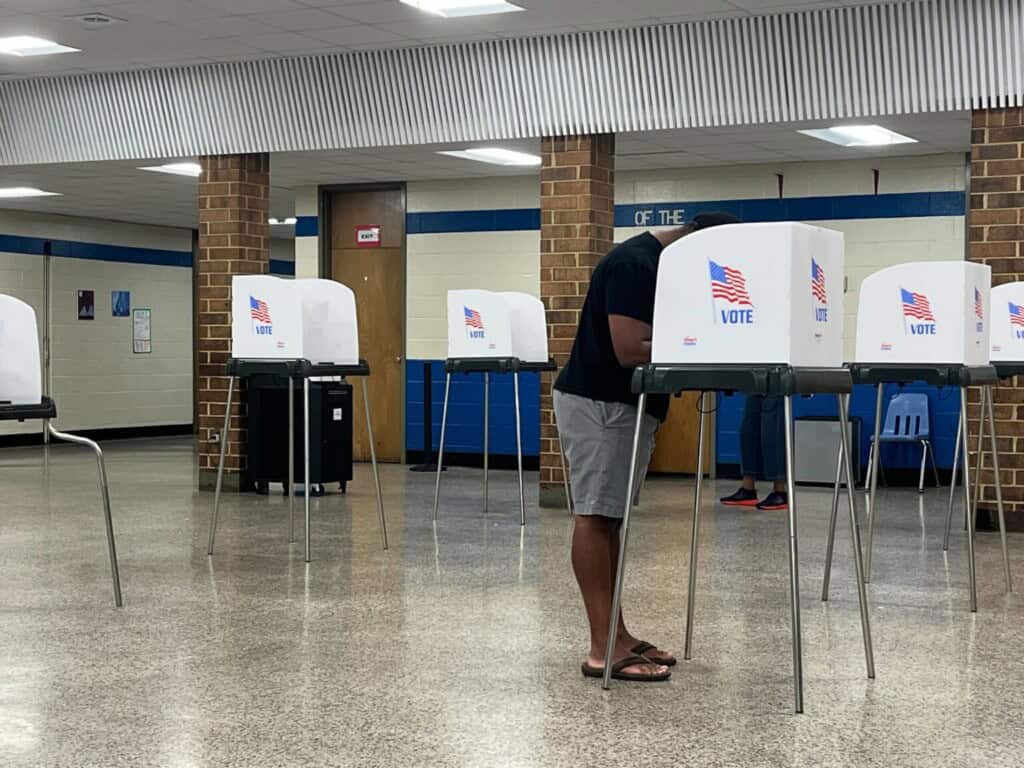
Timeline of the Virginia Voting Rights Battle:
- June 2023: Protect Democracy and the ACLU file King v. Youngkin in federal court.
- December 5, 2024: Fourth Circuit Court of Appeals clears the way for the case to proceed.
- January 22, 2026: U.S. District Court strikes down the broad ban as a violation of the 1870 Readmission Act.
- February 6, 2026: The General Assembly officially certifies the constitutional amendment for the ballot.
- November 3, 2026: Virginia voters will decide the final fate of the felon voting ban.
Conclusion: Dismantling the Jim Crow Legacy
In conclusion, the Virginia felon voting ban lawsuit of 2026 marks the beginning of the end for one of the most restrictive disenfranchisement regimes in the United States. Between the federal court’s “Readmission Act” ruling and the upcoming November 2026 referendum, Virginia is poised to finally dismantle a system designed in the post-Reconstruction era to suppress minority voices. As the Commonwealth prepares for its next major election cycle, the restoration of these voices represents a fundamental shift in the democratic landscape of the South.