Zakai Zeigler NCAA Eligibility Lawsuit: Analyzing the 2026 Antitrust Battle
The Zakai Zeigler NCAA eligibility lawsuit (Zeigler v. NCAA) stands as one of the most consequential legal challenges in the modern era of collegiate athletics. Filed in mid-2025 in the U.S. District Court for the Eastern District of Tennessee, the case represents a fundamental clash between traditional NCAA amateurism rules and the rapidly expanding commercial rights of student-athletes in the NIL (Name, Image, and Likeness) marketplace. As of early 2026, the case continues to reverberate through the legal community, setting the stage for a potential total overhaul of how eligibility is calculated across all Division I sports.
Background: The Rise of Zakai Zeigler and the “Four-Seasons” Rule
Zakai Zeigler, the heart and soul of the University of Tennessee Volunteers basketball program, completed four highly successful seasons under coach Rick Barnes. A two-time SEC Defensive Player of the Year, Zeigler became a fan favorite for his tenacious play and leadership. However, under the long-standing NCAA “Four-Seasons Rule” (Bylaw 12.8), athletes are permitted only four seasons of competition within a five-year eligibility window. Because Zeigler played in all four years since arriving on campus in 2021, the NCAA deemed him ineligible for a fifth season, despite his enrollment in a graduate program for the 2025-2026 academic year.
The Zakai Zeigler NCAA eligibility lawsuit argues that this rule is not merely an athletic guideline but an “arbitrary restraint of trade.” Zeigler’s legal team, including experts from Garza Law Firm and Litson PLLC, contends that the rule is particularly damaging in the NIL era, where an athlete’s value often peaks in their final years of collegiate play. By barring Zeigler from a fifth year, the NCAA is accused of preventing him from accessing a market where his brand could command millions of dollars.
The $4 Million Argument: NIL as an Economic Right
What distinguishes the Zakai Zeigler NCAA eligibility lawsuit from previous eligibility disputes is its heavy focus on quantifiable economic loss. The complaint cites an analysis by Spyre Sports Group, Tennessee’s NIL collective, which estimated Zeigler’s NIL valuation for a potential fifth season at $2 million to $4 million. Zeigler’s attorneys argue that the class of 2021 is the first group of athletes to have their commercial potential “truncated” by the four-season limit, as previous classes received “COVID years” that extended their earning windows.
This focus on market access mirrors the logic found in other high-profile corporate litigation, such as the Google lawsuit 2025. In both instances, the core of the legal argument is that a dominant entity (whether the NCAA or a tech giant) is using its position to suppress fair competition and limit the earning potential of individuals within that ecosystem. In Zeigler’s case, the “product” is his athletic labor and the accompanying “brand” he has built over four years at a Power Five institution.
Antitrust Theory: Applying the Sherman Act
The legal backbone of the Zakai Zeigler NCAA eligibility lawsuit is Section 1 of the Sherman Antitrust Act. Zeigler alleges that the NCAA and its member conferences are engaged in a “group boycott” or horizontal agreement to restrict the labor supply of experienced athletes. By forcing older, highly-marketable players out of the system, the NCAA allegedly suppresses “wages” (in the form of NIL deals) and replaces them with younger, less expensive labor (freshmen and sophomores).
The NCAA’s Defense: Preserving “Amateurism”
In response to the lawsuit, the NCAA has doubled down on its traditional defense. They argue that eligibility rules are non-commercial “regulatory” standards necessary to maintain the distinction between collegiate and professional sports. The NCAA’s legal filings suggest that if the court were to grant Zeigler a fifth year, there would be “no limiting principle,” leading to scenarios where athletes could play for six, seven, or even eight years while pursuing multiple degrees. This debate over institutional standards is similar to the complexities found in the Nissan door defect lawsuit, where the defense often hinges on whether a standard (safety or eligibility) was met according to established industry benchmarks at the time.
Judge Crytzer’s Ruling and the Preliminary Injunction
In June 2025, U.S. District Judge Katherine Crytzer denied Zeigler’s request for a preliminary injunction that would have allowed him to play the 2025-2026 season while the case was litigated. The judge’s reasoning was nuanced: while she rejected the NCAA’s claim that eligibility rules are entirely non-commercial, she found that Zeigler had not provided sufficient evidence of “substantial anticompetitive effect.” The court noted that because the NCAA does not directly pay the NIL money, the link between the “Four-Seasons Rule” and market harm was too indirect for an emergency injunction.
However, the judge did note that if Zeigler ultimately wins at trial, his losses could be addressed through “money damages.” This is a significant development, as it suggests that the court views NIL earnings as a legitimate form of compensable damage in an antitrust context. This shift in judicial thinking is part of a broader trend of holding large organizations accountable for financial mismanagement or billing discrepancies, as seen in the AT&T business billing lawsuit.
The DOJ and the “Flexible Rule of Reason”
A unique turn in the Zakai Zeigler NCAA eligibility lawsuit was the intervention of the U.S. Department of Justice (DOJ). In a statement of interest filed in June 2025, the DOJ urged the court to apply a “flexible rule of reason” to the NCAA’s eligibility rules. This approach, stemming from the Supreme Court’s Alston decision, requires the NCAA to prove that its rules actually benefit competition rather than just serving the interest of the association. The DOJ’s involvement signals that the federal government is closely watching the NCAA’s efforts to maintain control over athlete eligibility and compensation.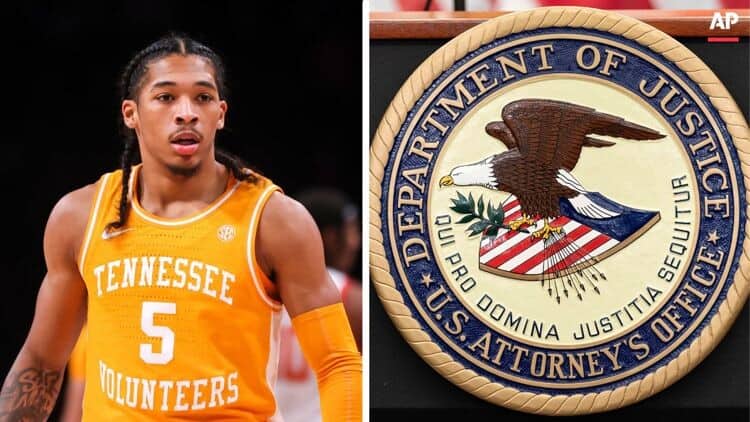
Impact on the Tennessee Volunteers and Zeigler’s Future
Despite the legal hurdle, the Tennessee basketball program initially held a roster spot for Zeigler, hoping for a late legal reversal. When the injunction was definitively denied, Zeigler made the difficult decision to turn professional, participating in the NBA Summer League with the Detroit Pistons and later exploring opportunities overseas. However, the lawsuit has not been dismissed. In late 2025, Zeigler amended his complaint to include details from the House v. NCAA settlement, arguing that the settlement itself proves the commercial nature of college sports and further validates his claim for damages.
Summary of Key Arguments in Zeigler v. NCAA:
- Commercial Impact: The rule prevents athletes from participating in the NIL market during their peak value years.
- Antitrust Violation: The 4-season limit acts as a horizontal restraint on the labor of experienced players.
- Discriminatory Redshirting: The current system allows some athletes to play five years (if they redshirt) while barring others, creating an arbitrary and unfair advantage.
- Academic Missions: Zeigler’s team argues that as long as an athlete is a full-time student (graduate or undergraduate), they should be eligible to compete.
Conclusion: The Future of Collegiate Eligibility
The Zakai Zeigler NCAA eligibility lawsuit is more than just a dispute over a single player’s career. It is a bellwether for the future of the NCAA. If the case proceeds to trial in 2027 and results in a victory for Zeigler, it could effectively end the “Four-Seasons Rule” and replace it with a system where eligibility is tied solely to academic standing. For now, the case remains a critical study in how antitrust law is being used to dismantle the last vestiges of the amateur model in college sports. As litigation continues to reshape the landscape, fans and legal experts alike are looking toward the next phase of this historic battle.