California National Guard Lawsuit: Constitutional Victory and State Sovereignty
On December 31, 2025, a months-long constitutional standoff between Sacramento and Washington D.C. ended with a major victory for state sovereignty. The California National Guard deployment lawsuit, spearheaded by Governor Gavin Newsom and Attorney General Rob Bonta, concluded after the federal government withdrew its appeal in the Ninth Circuit Court of Appeals. The case has now established a powerful 2026 legal precedent regarding the limits of executive power over state-managed military forces during domestic civil disturbances.
The Origins: Federalization and the June 2025 Protests
The conflict began on June 7, 2025, when the federal government invoked 10 U.S.C. § 12406 to federalize approximately 4,000 members of the California National Guard. This action was taken in response to protests in Los Angeles regarding federal immigration enforcement. For the first time in United States history, the President federalized a state’s National Guard over the explicit objections of that state’s Governor. The administration argued that the deployment was necessary to protect federal property and personnel, but the State of California quickly filed suit, alleging that the move was “political theater” designed to create a national police force.
Legal experts have noted that the arguments in the California National Guard deployment lawsuit often mirrored those found in other major institutional challenges, such as the NCAA transfer portal ruling update. In both instances, the core of the dispute was whether a central authority (the federal government or the NCAA) had the legal right to override the autonomy and established rights of state-level participants.
Legal Challenges: Posse Comitatus and the 10th Amendment
The lawsuit centered on two primary legal pillars. First, the state argued that the federalization violated the Posse Comitatus Act of 1878, which prohibits the use of federal military personnel for domestic law enforcement unless specifically authorized by Congress. Second, California alleged a violation of the 10th Amendment, contending that the federal government was “commandeering” state resources and stripping the Governor of his constitutional role as Commander-in-Chief of the state militia.
In September 2025, U.S. District Judge Charles Breyer issued a scathing 52-page ruling, finding that the administration’s actions were “illegal.” Judge Breyer noted that there was no evidence of a “rebellion” or a breakdown in local law enforcement that would justify such a takeover. He famously wrote that the administration was attempting to create a “national police force with the President as its chief.” This focus on corporate or governmental overreach is a recurring theme in modern litigation, similar to the arguments regarding consumer safety in the Nissan door defect lawsuit.
The Real-World Impact: Diverted Resources
While the legal battle was fought in the courts, the practical consequences for California were severe. By federalizing one-third of the active Guard members, the federal government effectively “neutralized” the state’s ability to respond to its own emergencies. Governor Newsom emphasized that these soldiers were pulled away from wildfire management, drug interdiction efforts, and humanitarian missions at food banks. The California National Guard deployment lawsuit highlighted that the federalization left the state vulnerable during peak fire season, a risk that many argued was a “willful disregard” for public safety.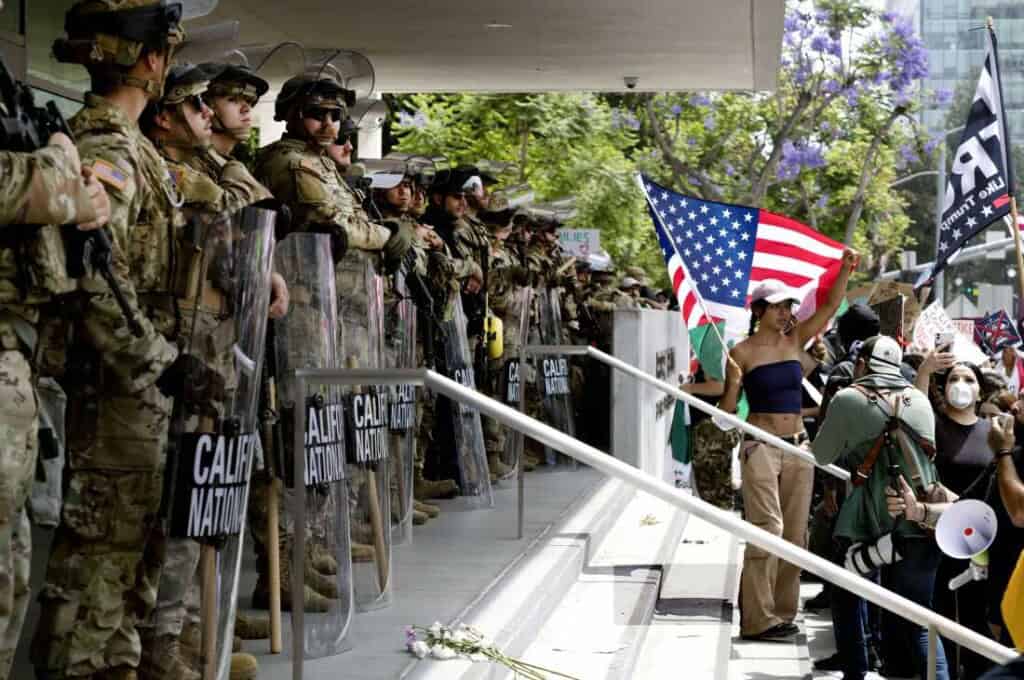
The Final Dismissal and Post-2025 Precedent
The turning point for the case occurred on December 31, 2025. Following a 6-3 Supreme Court ruling in a similar case involving the State of Illinois, the federal administration bowed to the rule of law and withdrew its appeal in the Ninth Circuit. This allowed Judge Breyer’s earlier injunction to take effect immediately. By January 2026, all federalized troops in Los Angeles were demobilized and returned to state control. The Ninth Circuit’s final order ensures that any future attempt to federalize state militias for domestic use must meet a much higher standard of “necessity” and “procedural compliance.”
Key Legal Takeaways for 2026:
- Sovereign Control: The Governor remains the primary authority for National Guard deployment unless a legitimate “invasion” or “rebellion” is proven.
- Statutory Limits: 10 U.S.C. § 12406 is not a “blank check” for federal control and is subject to judicial review.
- Financial Accountability: Congressional reports from February 2026 estimate the illegal deployment cost taxpayers over $496 million in just six months.
Conclusion
The resolution of the California National Guard deployment lawsuit is a landmark for American federalism. It reinforces the principle that the military should remain nonpartisan and that state resources cannot be seized for federal political objectives. As legal teams continue to monitor the aftermath, the case serves as a reminder of the power of the 10th Amendment in protecting state autonomy. For more on how state laws are challenging federal and corporate power, explore our latest updates on the Google lawsuit 2025 and the AT&T business billing lawsuit.