Rick Hendrick & Roger Penske Lawsuit: 2026 Antitrust Settlement and the “Evergreen” Charter Victory
As of March 17, 2026, the legal clouds that hovered over NASCAR’s most iconic figures have finally cleared. The Rick Hendrick and Roger Penske lawsuit saga—which saw the two Hall of Fame owners dragged into a high-stakes antitrust battle as witnesses—concluded with a landmark settlement in December 2025. While Hendrick and Penske were not plaintiffs, their forced involvement in the 23XI Racing v. NASCAR litigation became a defining moment for the sport. The resolution has not only protected their multi-million dollar investments but has also introduced a permanent “evergreen” charter system that ensures the long-term survival of Hendrick Motorsports and Team Penske.
The Forced Depositions: Hendrick and Penske Under Fire
In November 2025, a federal judge issued a stunning order that forced Rick Hendrick and Roger Penske to subject themselves to “full, unrestricted depositions.” The ruling came after NASCAR CEO Jim France added the two legends to his witness list, hoping their public support for the 2025 charter agreement would bolster NASCAR’s defense against Michael Jordan’s 23XI Racing and Front Row Motorsports. Despite filing motions to avoid testifying, the court ruled that no individual—regardless of their “notoriety”—would receive special treatment.
This legal pressure was unprecedented for the two owners, who have traditionally preferred behind-the-scenes diplomacy. The prospect of having their internal financials and sponsorship data scrutinized in open court is a risk-profile similar to the Paramount Trump lawsuit, where corporate giants were forced into settlements to avoid the public disclosure of sensitive internal communications.
The 2025 Settlement: “Evergreen” Charters for All
The NASCAR antitrust lawsuit ended abruptly on its ninth day of trial in December 2025. Facing the reality of Hendrick and Penske taking the stand, all parties reached a settlement that fundamentally changed the business of racing. The key victory for the entire garage—including those who didn’t sue—was the granting of “evergreen” charters. Previously, charters were set to expire every seven years; now, they are permanent assets that can be passed down or sold with guaranteed value.
Roger Penske called the settlement “tremendous news for the industry,” noting that the deal provides a platform that “strengthens our business in a unified way.” This shift toward permanent franchise-style value is a significant win for owners who have struggled with profitability, mirroring the “equitable framework” arguments found in the ICE detention work program lawsuit, where legal battles have focused on establishing fair, long-term labor and business standards.
Key Milestones of the Hendrick/Penske Legal Saga:
- October 2024: 23XI and Front Row sue NASCAR; Hendrick and Penske sign declarations supporting the league.
- November 12, 2025: Judge Kenneth Bell orders Hendrick and Penske to undergo unrestricted depositions.
- December 1, 2025: The federal antitrust trial begins in North Carolina.
- December 11, 2025: A settlement is reached on day nine; NASCAR grants permanent charters to all 36 teams.
- February 15, 2026: The first season under the “Evergreen Era” begins at the Daytona 500.
The 2026 Fallout: Internal Team Friction
While the league-wide settlement is complete, 2026 has brought new “inter-team” litigation. On February 19, 2026, Joe Gibbs Racing (JGR) filed an $8 million lawsuit against its former competition director, Chris Gabehart, for allegedly stealing trade secrets. This case has created a rift among the “Big Three” owners, as Gabehart’s new team, Spire Motorsports, has accused JGR of “nepotism and internal dysfunction.”
This type of intellectual property battle is a new frontier in NASCAR, reflecting the same “trade secret” tensions seen in the AI copyright lawsuit news of 2026. For Hendrick and Penske, the focus has shifted from defending the league to protecting their specific mechanical and data-driven advantages in an era where every team now has a permanent seat at the table.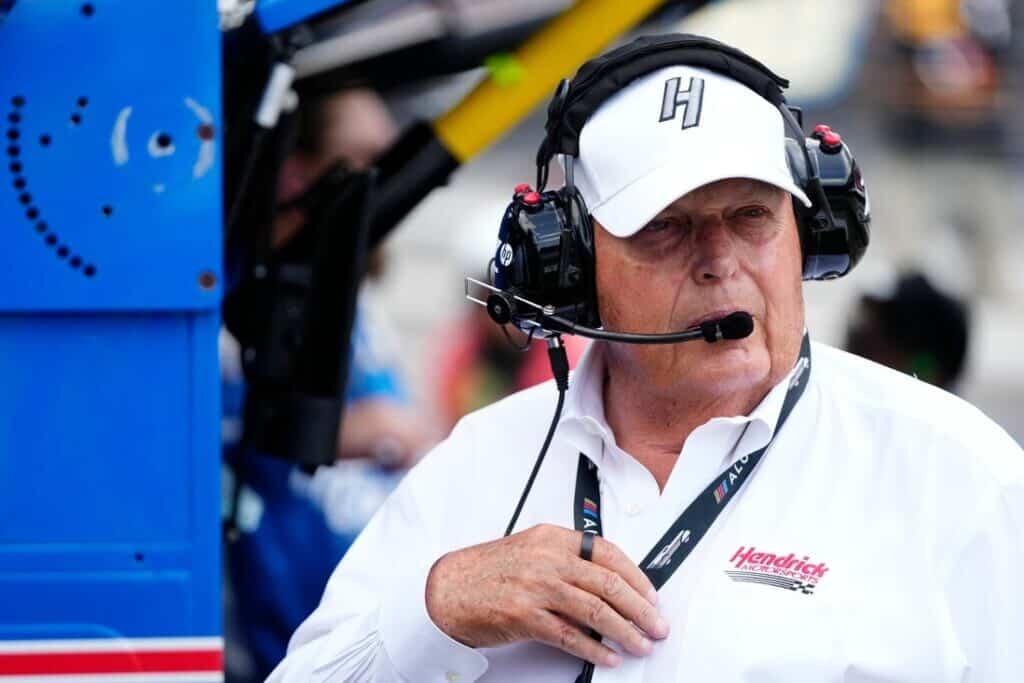
Mechanical Transparency and Next-Gen Reliability
A final pillar of the legal discourse in early 2026 involves the “Next-Gen” car’s reliability. During the trial, team owners cited rising costs and part failures as a primary reason for needing more revenue. This demand for mechanical accountability mirrors the Nissan VC-Turbo engines lawsuit, where manufacturers are being held to stricter standards for the durability of their “innovative” hardware. In NASCAR, the 2026 season has introduced a “five-strike rule,” giving teams the power to block expensive changes mandated by the league.
Conclusion: Stability at Last
In conclusion, the Rick Hendrick and Roger Penske lawsuit involvement in 2025 acted as the catalyst for the most significant financial restructuring in NASCAR history. By resolving the antitrust claims before a verdict could be reached, the sport avoided a catastrophic split. As the 2026 season races forward, the “Evergreen” charter system stands as a monument to a period of intense legal warfare that ultimately yielded a more stable, valuable, and unified future for America’s premier motorsport.