California vs. Trump: 62 Lawsuits and Counting as State Leaders Battle Federal Policies
As of March 17, 2026, the legal friction between the State of California and the Trump Administration has reached an unprecedented intensity. Attorney General Rob Bonta, backed by a $50 million litigation fund established by the state legislature, has filed his 62nd lawsuit against the federal government. The current wave of litigation spans critical sectors including fair housing, environmental safeguards, energy infrastructure, and international trade. California officials argue that the administration is systematically attempting to override state sovereignty through “unlawful” executive orders and agency guidance that bypasses Congressional intent.
The March 2026 Housing Crisis: Fair Housing Protection Lawsuit
On March 16, 2026, California co-led a coalition of 16 states in a federal lawsuit against the Department of Housing and Urban Development (HUD). The suit challenges new HUD guidance that threatens to decertify state agencies and pull federal funding—estimated at $3 million for California alone—if they enforce housing protections beyond the federal floor.
California law provides specific protections for veterans, seniors, and the LGBTQ+ community that the administration seeks to exclude from federal support. HUD Secretary Scott Turner has characterized the filing as “political lawfare,” but Attorney General Bonta maintains that the federal guidance violates the Administrative Procedure Act. This battle over “conditional funding” mirrors the Navient student loan debt lawsuit, where administrative threats were allegedly used to coerce compliance with federal directives at the expense of consumer protection.
Environmental and Energy Infrastructure Shutdowns
California is also fighting to protect its energy and climate goals following the termination of billions in federal grants. In February 2026, Bonta filed suit after the Department of Energy killed $1.2 billion in funding for ARCHES, a clean hydrogen project intended to decarbonize California’s ports and transit systems.
Additionally, a major conflict has emerged over the Las Flores Pipelines. In early 2026, the Trump Administration used the Defense Production Act to “federalize” these onshore pipelines, overriding state safety regulations and active court injunctions to allow a restart of oil production. This move to bypass state fire marshal oversight is being challenged in the Ninth Circuit, with California arguing that the administration is “prioritizing donors over communities.” This tension over regulatory authority is a recurring theme in the Kettering Health cyberattack lawsuit, where the breakdown of institutional oversight is a central claim.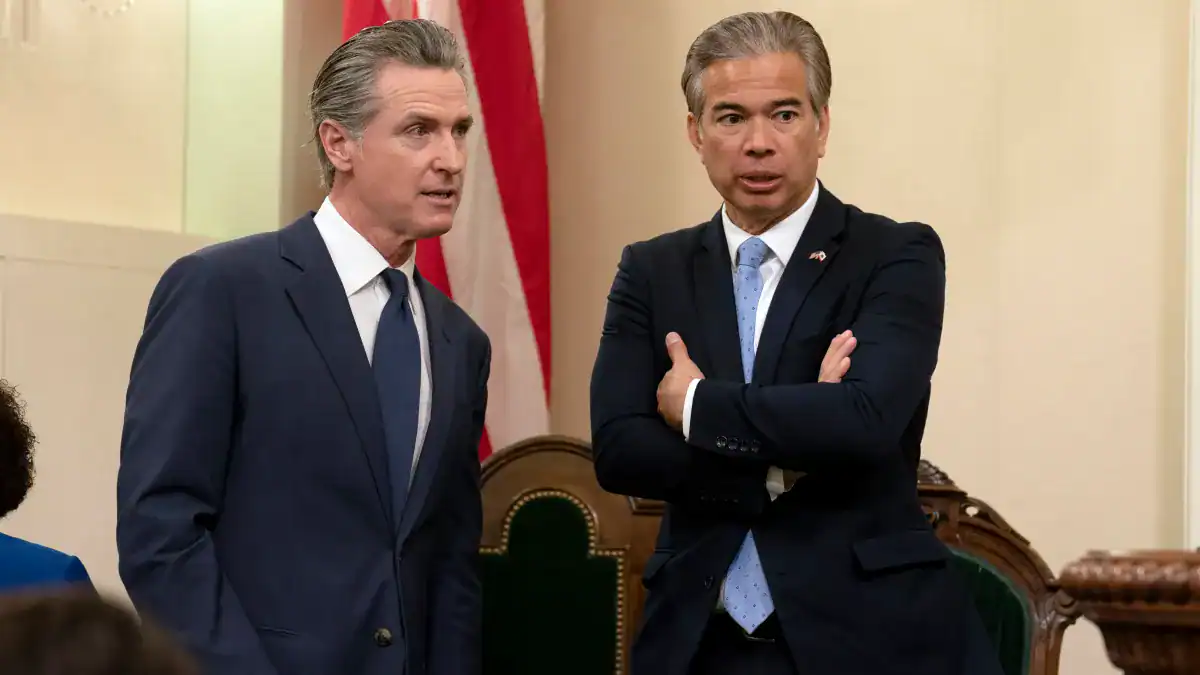
Key California vs. Trump Litigations (Q1 2026):
| Subject Matter | Lawsuit Type | Status (March 2026) |
|---|---|---|
| Fair Housing Protections | Federal Civil Rights | Filed March 16; seeking immediate injunction. |
| Section 122 Global Tariffs | International Trade | Motion for Summary Judgment filed March 13. |
| Clean Vehicle Safeguards | Environmental Law | DOJ suit filed against CA to stop EV mandates. |
| Sable Pipeline Restart | Public Safety/APA | Petition for review filed in the Ninth Circuit. |
| Clean Energy Grants | Separation of Powers | Filed Feb 18; challenges “Kill Lists” of funded projects. |
The “Toddler Tantrum” Tariffs and Trade Law
On March 5, 2026, California filed its 60th lawsuit, this time targeting the imposition of global tariffs under Section 122 of the Trade Act of 1974. Following a Supreme Court ruling that struck down previous tariffs as unconstitutional, the administration pivoted to this “archaic” statute. Governor Gavin Newsom famously referred to the new 10% global tax as a “toddler throwing a temper tantrum.”
The state argues that the administration is conflating a trade deficit with a “balance-of-payments deficit”—the specific legal requirement for Section 122. This dispute over the “authenticity” of economic data is a strategy seen in the PNC Bank data breach lawsuit, where legal outcomes hinge on whether the underlying justification for an action (a “hack” vs. an “error”) is factually sound.
Conclusion: The Rule of Law in a Divided Era
In conclusion, the California lawsuits against the Trump Administration in 2026 represent a historic stress test for the American federalist system. As the state moves toward a April 10 hearing on tariff injunctions and continues to fight the federalization of its pipelines, the stakes extend far beyond the borders of the Golden State. For California leaders, these 62 cases are a wall built to protect state laws from federal “regulatory overreach.” As the trial dates approach in late 2026, the courts will ultimately decide whether a state can maintain its own standards in the face of a unified federal “America First” agenda.