DHS Minnesota Enforcement Lawsuit: 2026 “Operation Metro Surge” and Tenth Amendment Challenges
A massive legal confrontation between the state of Minnesota and the federal government has reached a boiling point in the Twin Cities. As of March 17, 2026, the DHS Minnesota enforcement lawsuit is moving toward a critical hearing following the launch of “Operation Metro Surge.” Filed in January 2026 by Attorney General Keith Ellison alongside the cities of Minneapolis and Saint Paul, the lawsuit seeks to halt the deployment of thousands of Department of Homeland Security (DHS) agents. The litigation alleges that the federal surge—marked by high-profile raids and a fatal shooting—constitutes an unconstitutional “invasion” that violates state sovereignty and the First Amendment rights of Minnesotans.
The Catalyst: Operation Metro Surge and the Renee Good Shooting
The DHS Minnesota enforcement lawsuit was triggered by the December 2025 launch of Operation Metro Surge, a federal initiative that deployed over 2,000 armed and masked agents from ICE and CBP into the Minneapolis-St. Paul area. The tension turned tragic on January 7, 2026, when an ICE agent fatally shot 37-year-old Renee Nicole Good in Minneapolis. This incident, combined with reports of militarized raids near schools and bus stops, provided the legal “standing” for the state to argue that the federal government’s tactics have created widespread public chaos and endangered residents.
The focus on excessive force and lack of transparency mirrors the legal arguments seen in the Philips CPAP lawsuit, where corporate or governmental failure to warn the public about known risks is a central pillar of liability. In Minnesota, the state argues that DHS has effectively “commandeered” local resources, forcing Minneapolis police to spend millions in overtime to manage the fallout of federal actions.
Key Legal Arguments: Tenth Amendment and Retaliation
Attorney General Ellison’s complaint rests on three primary constitutional and statutory pillars:
- The Tenth Amendment: The state argues that by flooding the Twin Cities with federal agents who disrupt local policing and school operations, the DHS is infringing upon powers reserved strictly to the states.
- First Amendment Retaliation: The lawsuit alleges that Minnesota is being targeted specifically because of the progressive political viewpoints of its leaders. The suit points to statistics showing that Minnesota’s noncitizen population is just 1.5%—far below the national average—suggesting the “surge” is a tool for political retribution rather than a necessity for immigration enforcement.
- Administrative Procedure Act (APA): Plaintiffs claim the rescission of “sensitive location” protections (which previously limited enforcement near schools and hospitals) was an “arbitrary and capricious” action taken without regard for community impact.
This battle over “viewpoint discrimination” is a recurring theme in high-stakes litigation, much like the Blake Lively lawsuit dismiss status, where the primary dispute hinges on whether actions were motivated by legitimate professional needs or a desire for personal and political “smear campaigns.”
Timeline of the 2026 DHS Conflict:
- December 2025: Operation Metro Surge begins with the deployment of thousands of federal agents.
- January 7, 2026: Fatal shooting of Renee Good by a federal agent in Minneapolis.
- January 12, 2026: Minnesota Attorney General Keith Ellison files the federal lawsuit (State of Minnesota v. DHS).
- February 4, 2026: A coalition of Minnesota school districts joins the fight, filing a separate suit to block enforcement near school grounds.
- March 2, 2026: Minnesota files a parallel lawsuit against the federal government for withholding $243 million in Medicaid funds, alleging a “campaign of revenge.”
The $243 Million Medicaid Funding Freeze
In a related development on March 2, 2026, the DHS Minnesota enforcement lawsuit expanded to include a fight over healthcare funding. The federal government announced it would withhold $243 million in Medicaid payments due to alleged “noncompliance.” Minnesota officials have countered by suing the Department of Health and Human Services, arguing that the funding freeze is an illegal attempt to bypass the judicial system and punish the state for its opposition to the immigration surge.
The financial pressure being applied to the state is similar to the “economic loss” tracks seen in the Verizon class action lawsuit, where systemic billing and funding discrepancies are used as leverage in broader disputes. For Minnesota, these cuts represent roughly 7% of its quarterly Medicaid budget, threatening healthcare for low-income families.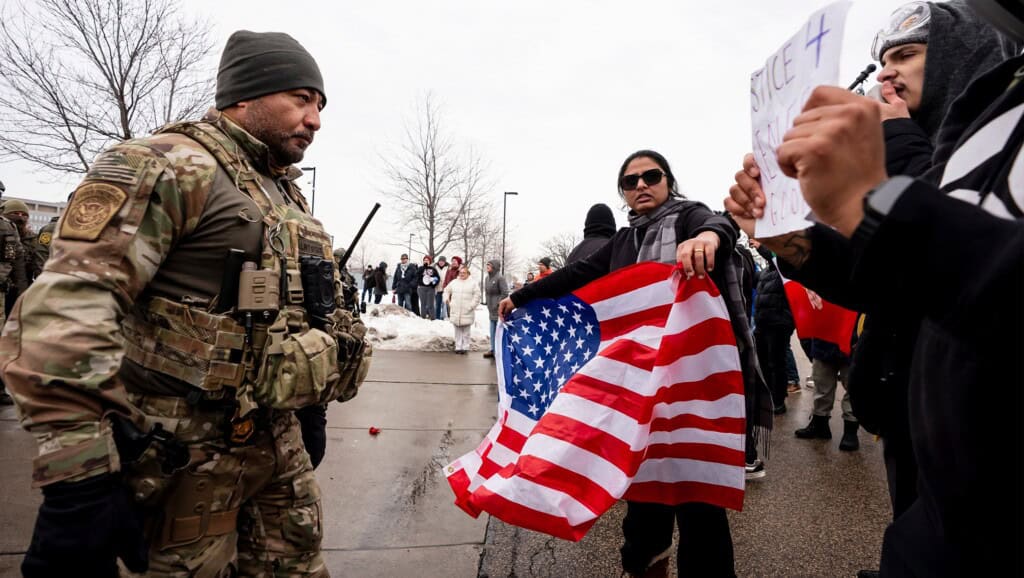
Status of the Temporary Restraining Order (TRO)
As of mid-March 2026, the court has declined to issue an immediate Temporary Restraining Order to stop ICE operations, citing the need for a full evidentiary hearing. However, the judge has ordered DHS to provide “incident reports” for all uses of force within the state since December. This discovery phase is expected to be as intense as the document-retrieval process in the Greenpeace Dakota pipeline lawsuit, where internal communications were used to prove “bad faith” intent.
Conclusion: A Landmark Test of Federalism
The DHS Minnesota enforcement lawsuit of 2026 is more than a local dispute; it is a landmark test of the limits of federal power in a divided nation. As the state fights to protect its “sensitive locations” and its budget from federal intervention, the outcome of this case will likely set the precedent for how federal agencies can operate within states that vocally oppose their mandates. With the May trial dates approaching, the Twin Cities remain the epicenter of a constitutional debate that will define the relationship between state sovereignty and federal enforcement for years to come.