Publix Deceptive Pricing Lawsuit: 2026 Dismissal and the “Publix Promise” Defense
A major legal challenge targeting the pricing integrity of the South’s largest grocer has reached a definitive conclusion. In March 2026, a federal judge in the Southern District of Florida officially dismissed the Publix deceptive pricing lawsuit, a class-action effort that had accused the retailer of systematically overcharging customers for weighted items. The case, Koutouzis v. Publix Super Markets, Inc., centered on allegations that the grocer’s point-of-sale (POS) system was programmed to “pad” the weights of meats, cheeses, and deli products during sales. However, the court ruled that the plaintiff lacked the necessary legal standing to proceed, citing Publix’s robust internal refund policies as a primary factor in the decision.
The Core Allegations: The “Weight-Inflation” Scheme
The lawsuit, originally filed in early 2025, alleged a sophisticated “deceptive weighting scheme.” According to the complaint, when a product was advertised at a reduced sale price (such as $4.99/lb down from $6.99/lb), the Publix checkout system would automatically increase the recorded weight of the item. For example, the lead plaintiff claimed that a pork tenderloin labeled as 2.83 pounds suddenly registered as 3.96 pounds at the register, effectively negating the advertised discount and forcing the customer to pay the original, higher price.
This focus on digital “glitches” and automated pricing discrepancies mirrors the technical arguments found in the Audible digital ownership lawsuit, where the legal battle hinges on how software interfaces represent costs and ownership rights to the consumer. In the Publix case, the plaintiff argued that because receipts do not list the product weight, most shoppers remained entirely unaware of the overcharge.
The March 2026 Ruling: Why the Case Was Dismissed
On March 10, 2026, Judge Rodolfo Ruiz II granted Publix’s motion to dismiss the first amended complaint. The court’s reasoning focused on “Article III standing”—the legal requirement that a plaintiff must show a concrete injury that the court can redress. The judge noted that the plaintiff had successfully obtained refunds for several of the items she claimed were overcharged. For the items where she did not receive a refund, the judge noted she “chose not to do so” despite being aware of Publix’s standing offer to correct pricing errors.
The ruling emphasized that a company’s proactive refund policy can essentially “cure” an injury before it reaches the level of a federal lawsuit. This emphasis on corporate policy as a legal shield is a recurring theme in 2026 litigation, much like the Philips CPAP lawsuit, where the existence of a structured settlement and medical monitoring program helped define the limits of the manufacturer’s liability.
The “Publix Promise” and Refund Integrity
Central to the defense was the “Publix Promise,” a long-standing company policy that guarantees accuracy at the register. The policy states: “If during checkout, the scanned price of an item exceeds the shelf price or advertised price, we will give the customer one of that item free.” The court found that because this remedy is readily available to all customers, the plaintiff could not claim she was permanently harmed by a pricing error.
The reliability of corporate “promises” and internal audits is also a key factor in the VW Tiguan oil consumption lawsuit, where the distinction between “normal” operational behavior and a “defective” system determines the outcome for thousands of consumers. In the Publix matter, the court viewed the discrepancies as potential “human or system errors” rather than a fraudulent corporate mandate.
Expired Signs and Baby Formula Pricing
Beyond the weight-inflation claims, the Publix deceptive pricing lawsuit also targeted two other common consumer complaints:
- Expired Sale Signs: The suit alleged that Publix regularly leaves up previous weeks’ sale signs to entice shoppers into buying items at full price.
- Baby Formula Unit Pricing: The complaint charged that shelf tags for baby formula often displayed incorrect “price-per-ounce” data, making it difficult for parents to compare value accurately.
While these claims added weight to the narrative of “deception,” the judge ruled that they did not overcome the fundamental lack of standing. This focus on “price per unit” transparency is a major issue in 2026 retail law, similar to the consumer transparency requirements being litigated in the Costco Trump tariffs lawsuit.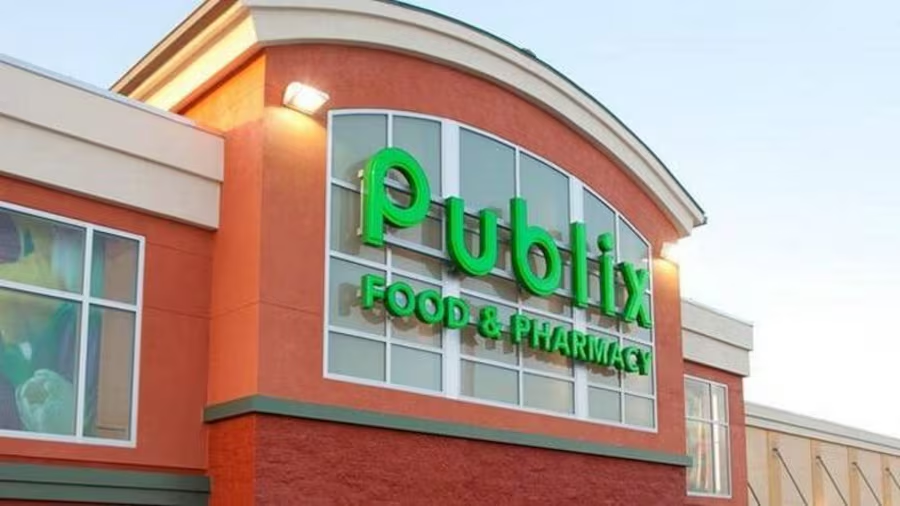
Consumer Vigilance in 2026
Despite the dismissal, legal experts suggest that the Publix deceptive pricing lawsuit serves as a critical reminder for shoppers to monitor checkout screens. Because the weight of an item is often visible on the register display but hidden on the final printed receipt, the only window to catch a “weight-inflation” error is during the actual transaction.
As retail technology evolves, cases like this—and the Slipknot domain control lawsuit—show that the burden of proof often rests on the consumer or the trademark holder to act quickly and document discrepancies before they become “stale” in the eyes of the court.
Summary: No Payout for Publix Shoppers
In conclusion, there will be no class-action settlement or “payout per person” resulting from the Publix deceptive pricing lawsuit in 2026. By dismissing the case with prejudice, the court has signaled that Publix’s internal “Promise” and refund policies are sufficient legal remedies for pricing errors. For the “Great Place to Work” grocer, the ruling is a significant victory that protects its reputation against claims of systemic fraud, while for consumers, it reinforces the necessity of checking the math at the self-checkout lane.