Costco Trump Tariffs Lawsuit: Supreme Court Ruling and 2026 Refund Updates
The global retail landscape has been shaken by a landmark legal victory for the private sector. The Costco Trump tariffs lawsuit, which began as a bold challenge to executive overreach, has culminated in a historic March 2026 update following a decisive Supreme Court ruling. As one of the primary plaintiffs in a consolidated action involving over 2,000 U.S. companies, Costco Wholesale Corp. successfully argued that the use of the 1977 International Emergency Economic Powers Act (IEEPA) to impose sweeping global tariffs was an unconstitutional delegation of Congressional authority. Now, with an estimated $175 billion in total government refunds on the line, the focus has shifted from the courtroom to the warehouse floor as Costco determines how to return these funds to its members.
The Legal Foundation: Challenging the IEEPA
The core of the Costco Trump tariffs lawsuit centered on “Liberation Day” tariffs and subsequent duties imposed on a wide array of imported goods. Costco’s legal team argued that the President exceeded the authority granted by the IEEPA, which was intended for targeted sanctions during national emergencies, not as a tool for broad, permanent trade policy. In February 2026, the Supreme Court ruled 6-3 in favor of the importers, stating that the power to levy taxes and duties remains an exclusive pillar of the Legislative Branch.
This victory for corporate transparency and constitutional limits mirrors the arguments seen in the Cedar Fair Six Flags merger lawsuit, where the accuracy of financial disclosures and executive authority are central to the litigation. In both cases, the courts have emphasized that large-scale economic maneuvers must adhere to strict procedural and legal frameworks.
The $175 Billion Refund Clock
Following the Supreme Court’s decision, the U.S. Court of International Trade (CIT) issued a “Refund Order” on March 4, 2026. This order directs U.S. Customs and Border Protection (CBP) to begin the arduous process of liquidating and reliquidating entries that were subject to the unlawful tariffs. For Costco, which managed its supply chain to mitigate these costs, the potential windfall is significant. During a March 2026 earnings call, CEO Ron Vachris noted that while the company did not always pass the “full cost” of the tariffs onto its members, it is committed to returning any recovered funds through “lower prices and better values.”
The complexity of these government-mandated refunds is similar to the administrative hurdles discussed in our analysis of government emergency housing contracts, where the tracking of public funds and contractual liability often leads to years of secondary litigation. For Costco, the “reliquidation” process is expected to take between 12 and 24 months.
Consumer Class Action: The “Double Recovery” Dispute
While Costco celebrates its victory against the government, it faces a new legal challenge from its own customer base. In March 2026, a proposed class-action lawsuit was filed in an Illinois federal court (Sockov v. Costco Wholesale Corp). The plaintiff alleges that Costco would be “unjustly enriched” if it kept the government refunds after already charging members higher prices to cover the tariff costs. The suit claims that since consumers shouldered the majority of the tariff burden, they—not the corporation—are the rightfully injured parties.
Costco has pushed back against these claims, stating that its high inventory turnover and membership-based model mean that pricing was often adjusted based on competitive market rates rather than a direct 1:1 tariff pass-through. This defense is reminiscent of the arguments used in the Raleigh nightlife permit lawsuit, where businesses argued that their operational fees and pricing structures were tied to broader market forces rather than specific regulatory penalties.
Key Facts of the 2026 Tariff Refund Process:
- The Total Owed: Estimates suggest the U.S. government owes between $166 billion and $179 billion to importers nationwide.
- Interest Payments: The CIT ruled that companies are entitled to the principal amount plus interest accrued during the litigation period.
- CBP System Updates: The Trump administration has requested a 45-day window to build a new electronic portal to handle the volume of more than 330,000 refund claims.
- New Tariffs: Despite the ruling, the administration has already moved to replace the IEEPA duties with new “Section 232” or “Section 122” tariffs, which are currently being reviewed by trade experts.
Supply Chain Mitigation and Future Pricing
Throughout 2025, Costco aggressively rerouted goods from high-tariff countries to markets like Vietnam and Thailand to minimize its tax liability. This strategic shift allowed the company to keep prices on items like electronics, eggs, and textiles lower than many of its competitors. However, for “non-food” items that could not be rerouted, the Costco Trump tariffs lawsuit was the only viable path to financial recovery.
Just as the VW Tiguan oil consumption lawsuit focuses on the long-term cost of ownership for a defective product, the tariff litigation focuses on the “hidden taxes” that increase the cost of living for American households. Costco’s commitment to “transparency” in this process is seen by many as a bid to maintain its status as a “price authority” in a volatile economic climate.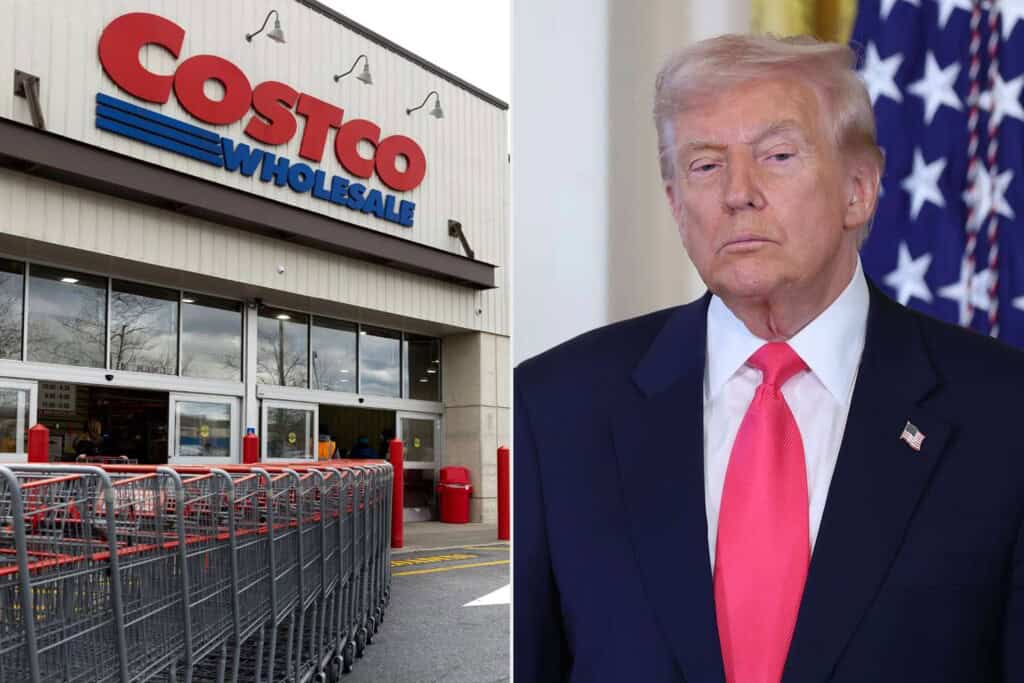
What Members Should Expect
Most analysts agree that Costco members will not receive a “rebate check” in the mail. Instead, the value of the tariff refunds will likely be seen in “price deflation” across core categories. By March 2026, Costco had already begun lowering prices on cookware, coffee, and home goods in anticipation of the first wave of refunds. For investors, the concern remains whether the customer class-action suit will force the company into a more direct—and expensive—repayment model.
Summary: A Victory for Constitutional Trade
In conclusion, the Costco Trump tariffs lawsuit has reached its zenith in 2026, marking a significant win for the separation of powers. While the refund process will be long and legally complex, the case has established that the executive branch cannot unilaterally upend global trade without specific Congressional approval. For Costco, the challenge now lies in balancing government reimbursements with the demands of its members and the looming threat of consumer-led litigation.