FBI Mistaken Raid Atlanta Lawsuit: 2026 Supreme Court Victory Revives Family’s Claims
A nearly decade-long quest for accountability has reached a historic turning point in the nation’s highest court. As of March 17, 2026, the FBI mistaken raid Atlanta lawsuit (Martin v. United States) has been officially revived following a landmark, unanimous U.S. Supreme Court decision. The ruling, authored by Justice Neil Gorsuch in June 2025, overturned previous lower court dismissals that had shielded the federal government from liability. The case, which involves a 2017 “wrong-house” SWAT raid in a suburban Atlanta neighborhood, is now back in the 11th Circuit Court of Appeals for a “careful reexamination,” setting the stage for a potential multi-million dollar settlement or trial later this year.
The 2017 Incident: A GPS Error and a Flash-Bang Grenade
The FBI mistaken raid Atlanta lawsuit stems from a pre-dawn operation in October 2017. A six-member FBI SWAT team, intending to raid a suspected gang hideout, instead stormed the quiet home of Hilliard Toi Cliatt, his partner Curtrina Martin, and her 7-year-old son, Gabe. Despite the target address being 3741 Landau Lane, the raid leader, Special Agent Lawrence Guerra, allegedly relied on a personal GPS device that led the team to 3756 Denville Trace—the Martin-Cliatt residence.
The agents breached the front door, detonated a flash-bang grenade in the bedroom, and held the family at gunpoint before realizing their error. This level of trauma-induced litigation mirrors the “invasion of seclusion” arguments found in the Roblox lawsuit addiction cases, where the core of the injury is the psychological impact on minors. In Atlanta, the plaintiffs argue the raid “cost Gabe his childhood,” leading to years of therapy and lasting trauma.
The Supreme Court Ruling: Piercing Sovereign Immunity
For years, the FBI mistaken raid Atlanta lawsuit was blocked by the doctrine of “sovereign immunity.” The 11th Circuit had previously ruled that the government was shielded because the agents were performing “discretionary functions.” However, the Supreme Court’s 2025 ruling clarified that the Federal Tort Claims Act (FTCA) was specifically designed to allow citizens to sue for such errors.
Justice Gorsuch noted that “double-checking an address” is a minimal standard that does not involve the kind of high-level policy trade-offs typically protected by immunity. This legal pivot toward “minimal standards of care” is also a central theme in the GM 5.3L V8 engine lawsuit, where the court ruled that mechanical negligence cannot be excused by corporate discretion.
Key Milestones of the Martin v. United States Case:
- October 2017: Botched raid occurs; FBI agents apologize but the government later refuses to pay for damages.
- June 12, 2025: U.S. Supreme Court unanimously rules in favor of the Martin-Cliatt family.
- August 2025: The Institute for Justice (IJ) officially moves to reopen discovery in the 11th Circuit.
- March 2026: Appellate judges begin reviewing whether the “discretionary-function exception” can ever apply to a wrong-house raid.
Projected Payouts and the “Law Enforcement Proviso”
While a final FBI mistaken raid Atlanta lawsuit payout has not been reached as of March 2026, legal experts expect the settlement to be substantial given the Supreme Court’s strong language. The family is seeking damages for assault, battery, false arrest, and intentional infliction of emotional distress. Because the FTCA points back to state law, Georgia’s “private individual” liability standards will determine the final amount.
Comparative settlements for “wrong-door” raids involving flash-bang grenades have historically ranged from $250,000 to $1.2 million per household. This potential for high-value restitution is a significant shift from the Verizon class action lawsuit, where millions of people received small, pro-rata payments. In the FBI case, the payout will be concentrated on the specific physical and psychological damages suffered by the three occupants.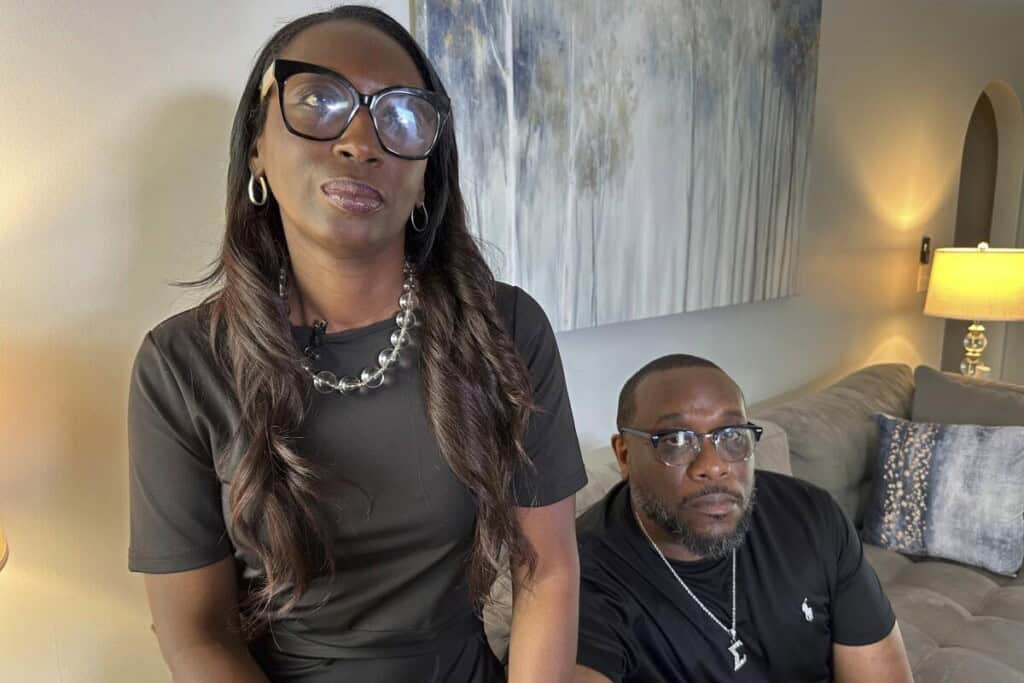
Impact on Federal Accountability in 2026
The success of the FBI mistaken raid Atlanta lawsuit has already triggered a wave of similar filings across the country. In March 2026, a separate family in a Dallas suburb cited the *Martin* precedent in their own suit against a federal drug task force. This trend reflects the “ripple effect” seen in the DHS Minnesota enforcement lawsuit, where state leaders are using new legal interpretations to challenge federal overreach and tactical errors.
Conclusion: Setting a Minimum Standard for Safety
In conclusion, the FBI mistaken raid Atlanta lawsuit has transformed from a local tragedy into a national standard for federal accountability. The Supreme Court’s 2025 decision has made it clear that “discretion” is not a license for carelessness. As the 11th Circuit finalizes its reexamination in the coming months, the Martin-Cliatt family stands on the verge of a legal victory that ensures no federal agent is “above the law” when they cross the threshold of an innocent home.